
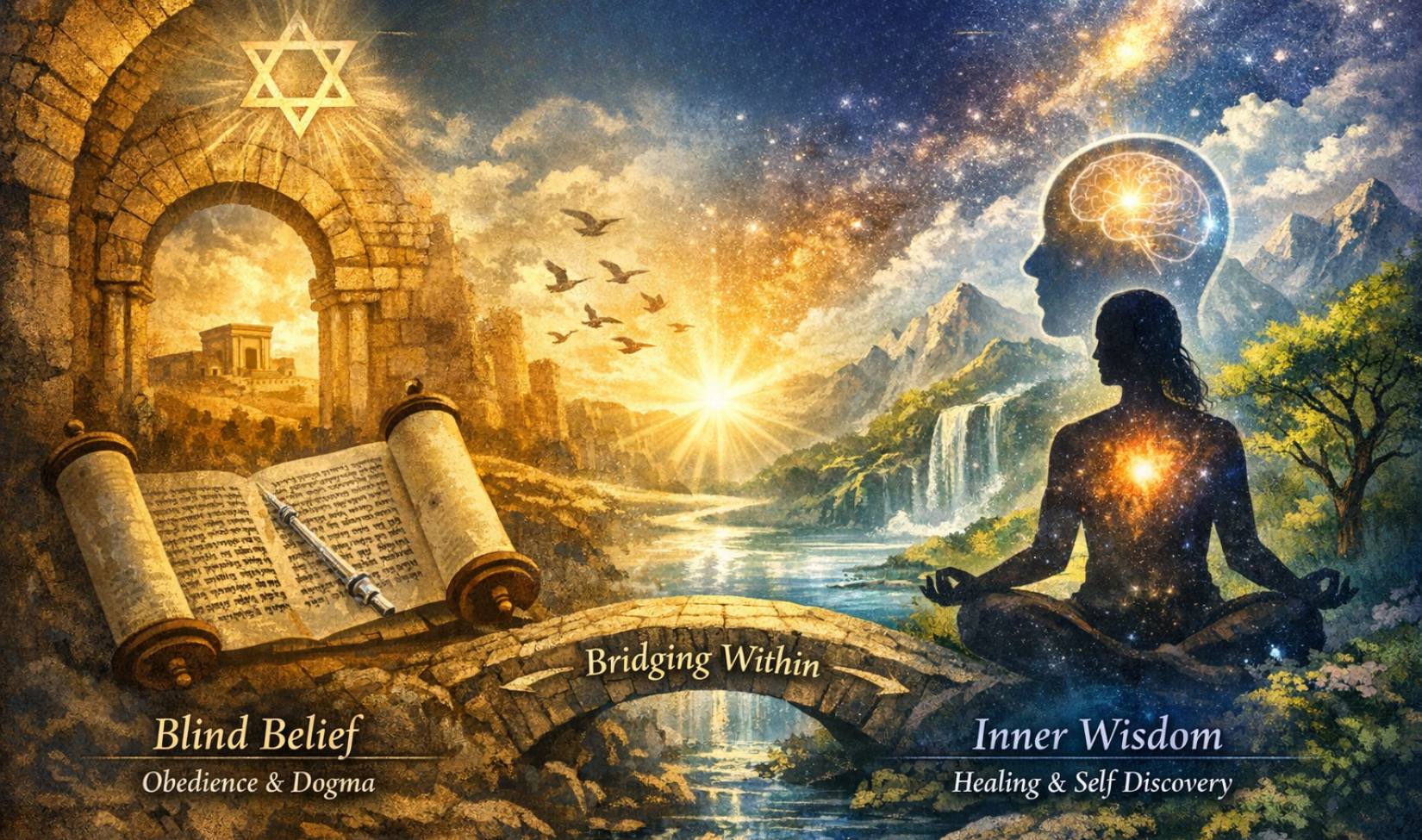
Many people speak of faith, something that should never be questioned. They are taught that to be faithful means to accept scripture exactly as written, without questions, without doubt, without exploration. Questioning was not allowed and that means you do not truly believe in God.
And yet, what I have observed is far more complex. There is a beautiful side to this kind of faith. I have seen people become kinder, more grounded, more sober, more community-oriented. Faith can soften the heart. It can bring humility, patience, and a sense of belonging. These are real and meaningful gifts.
But I have also witnessed something else.
I have seen people who follow scripture meticulously, who obey rules precisely, who believe without question — and yet still become seriously ill, even terminally ill. This raised a question that stayed with me: if they are so devoted to faith, to the outer God, why do people still get sick? Aren’t they supposed to be protected?
That question only strengthened my understanding that the answer is not blind adherence to scripture or externally imposed doctrine. Health, healing, and wholeness do not come from words on a page – no matter how sacred – but from understanding the self.
Disease does not arise from a lack of obedience. It arises from unresolved trauma, suppressed emotions, unspoken fear, unexpressed truth, and disconnection from one’s inner voice.
Following scripture outwardly may help a person connect to something higher – but healing happens inward. And this is what many religious groups fail to understand.
True healing begins when a person turns toward themselves:
• listening to the body
• understanding emotional wounds
• meeting fear instead of suppressing it
• reclaiming inner authority
Without this inner work, no amount of external rule-following can restore balance. This is where the distinction becomes clear. Faith that disconnects a person from their inner wisdom can become another form of control. Faith that encourages inward listening becomes a bridge to true awareness.
In this sense, the Pleiadean explanation resonates deeply with me. It does not dismiss faith – it reframes it. It suggests that the greatest gift given to humanity was not blind belief, but consciousness. Not obedience, but discernment. Not silence, but inner knowing.
Scripture may point the way, but the work is done within.
If something in this reflection resonates, perhaps it is not asking you to abandon faith, but to deepen it. To move from outward adherence to inward understanding. From rules to awareness. From fear to truth. After all, who does not want to be happy, fulfilled, and free?
And if you feel ready to explore another perspective on scripture, the story continues. To read the Pleiadean account of the Anunnaki – their role in humanity’s creation, the conflict between control and freedom, and Enki’s mission to preserve life and consciousness
— continue here →









0 Comments